Resources Hub

Article
How to audit and fix duplicate CRM records in 2026
Your CRM is supposed to be the system of record for your entire go-to-market operation. In practice, it often becomes a graveyard of duplicate contacts, mismatched accounts, and stale fields that no one trusts. When that happens, every downstream system that depends on CRM data starts making bad decisions.
Scoring models weight the wrong signals. Routing sends leads to the wrong reps. Segmentation breaks. Campaigns reach the same buyer five times across three different records. The problem is not that your team is careless. The problem is that CRM data quality issues compound fast, especially when you are pulling data from multiple sources and running enrichment at scale.
This guide walks through how to find the root causes of duplicate records, build governance rules that hold, and maintain data validation and cleansing as an ongoing operation rather than a quarterly fire drill.
Product sheet
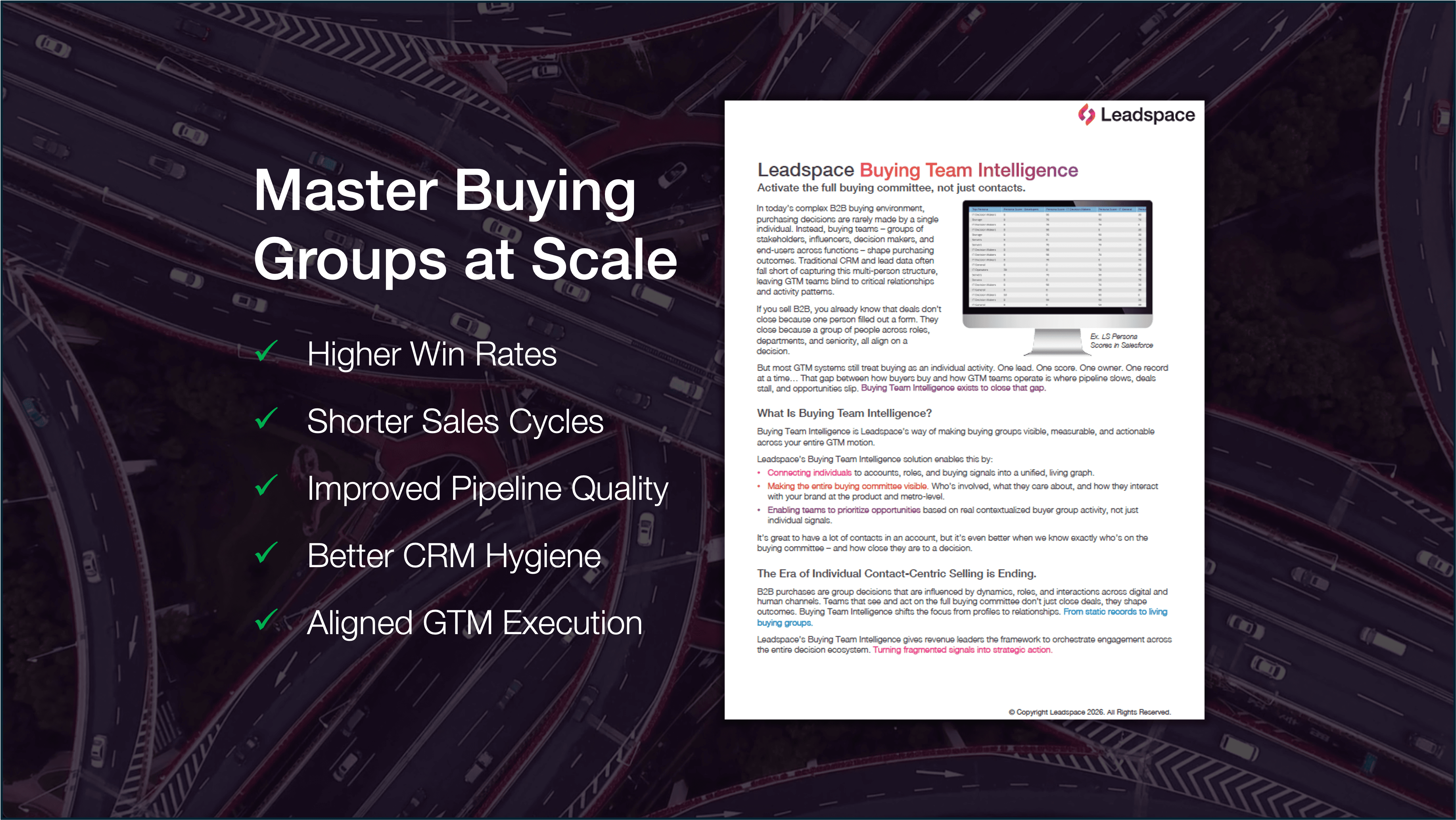
Leadspace Buying Team Intelligence
B2B deals don’t close because one contact engages, they close when an entire buying committee aligns. Yet most GTM systems still operate at the individual record level, leaving revenue teams blind to the relationships, roles, and signals that actually drive decisions.
Leadspace’s Buying Team Intelligence makes buying groups visible, measurable, and actionable by connecting people to roles, accounts, hierarchies, and real-time buying signals in a unified, living data graph.
The result: sales, marketing, and RevOps teams can identify who truly influences and approves decisions, prioritize accounts showing coordinated buying activity, and orchestrate multithreaded engagement based on how buyers actually buy rather than on how CRM records are structured.
Product sheet
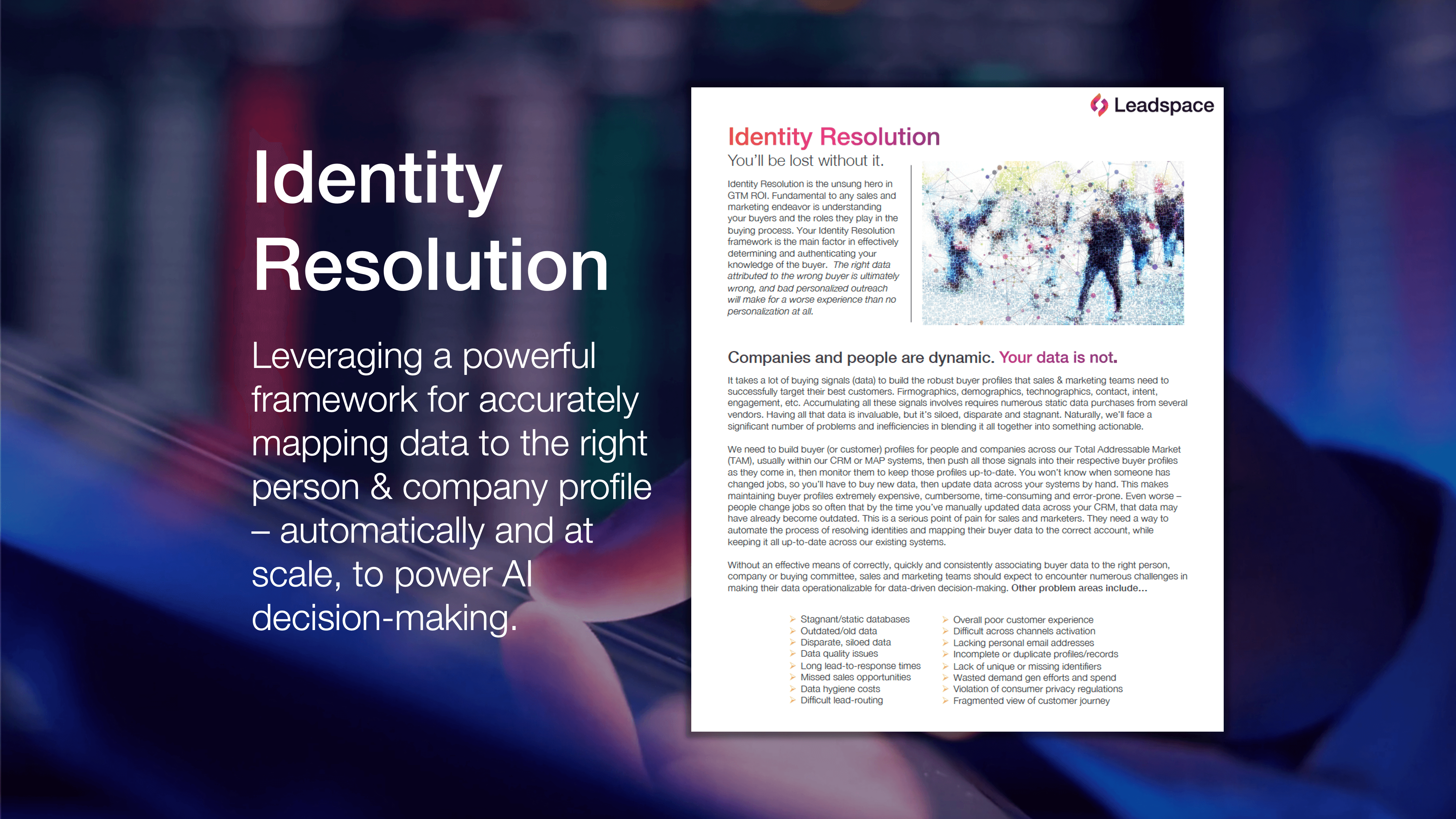
Identity Resolution Guide
Modern B2B growth depends on accurate, unified buyer data. Yet most organizations operate with siloed, outdated, and fragmented signals spread across systems. Identity Resolution is the foundation that ties it all together.
By automatically associating firmographic, demographic, technographic, engagement, and intent data to the correct people, accounts, and buying groups, an Identity Resolution framework creates dynamic, 360-degree buyer profiles that stay accurate in real time.
Instead of manually reconciling records, deduplicating contacts, and guessing at lead-to-account matches, revenue teams gain a trustworthy, continuously updated data layer that powers faster routing, smarter personalization, cleaner CRM hygiene, better forecasting, and true lead-to-account alignment. When identity is resolved correctly, every GTM motion becomes more precise, scalable, and revenue-driven.
Product sheet
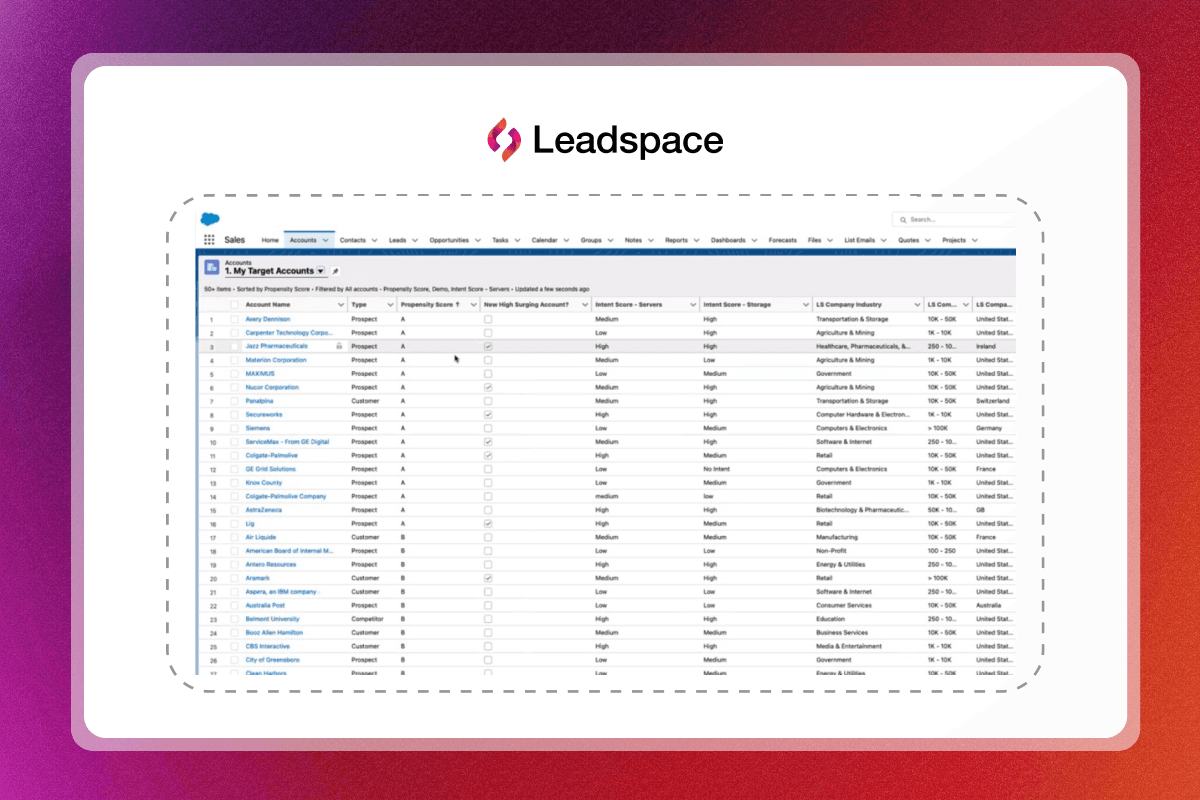
Drive Revenue Outcomes with Smarter Inbound Lead Management
If your inbound leads aren’t converting fast enough, you’re not just losing opportunities – you’re funding your competitors’ growth. Today’s buyers expect instant, relevant engagement. That’s why optimizing inbound lead management isn’t just operational hygiene – it’s a revenue growth lever.