Article

10 Benefits to Mapping Hierarchies Across Your Buyer Data

B2B Hierarchy Data
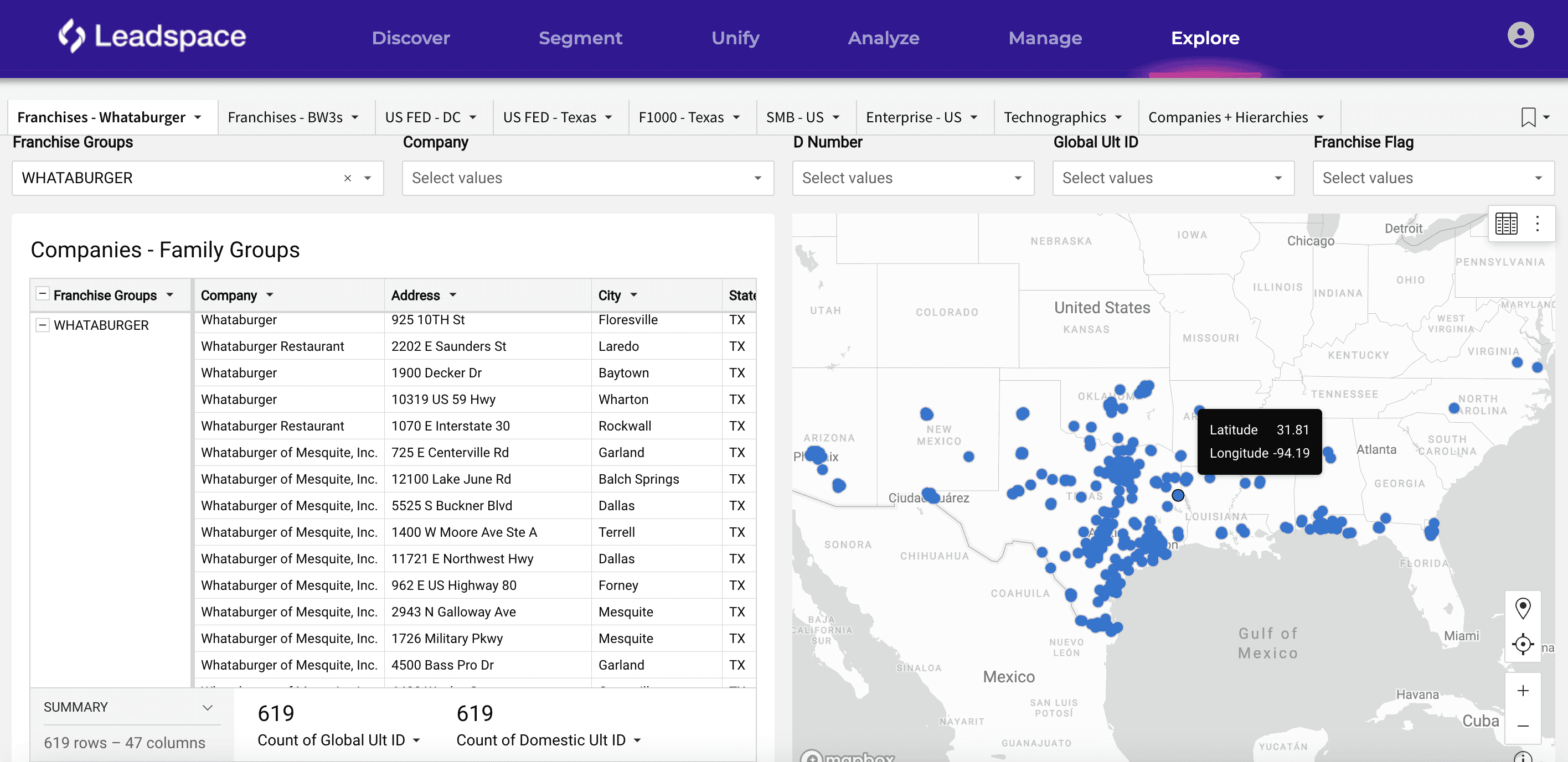
B2B Company Hierarchy Data

If you’re part of a sales or marketing team, then you’re used to leveraging numerous systems full of people, company and account-level data in an attempt to decide where to focus your resources and effort – but how many of you have hierarchies mapped so that you can explore how your profiles for people and companies connect to each other? Can you look at a company’s profile in your system, then click your way through to that company’s global ultimate, subsidiaries, divisions, employees or buying groups? Do you know who people report to? The parent/child relationships in their corporate family? Can you identify who the decision-makers, influencers and end-users are?


Most sales and marketing teams can’t easily determine any of those invaluable insights because they don’t have hierarchies effectively mapped across their TAM within their CRM and marketing automation systems. That’s unfortunate because understanding hierarchies across your buyer data can provide several significant benefits, especially in enhancing business operations, customer relationships and strategic decision-making. Here are 10 business capabilities that are particularly enhanced by having hierarchies mapped across your buyer data:

Data Organization & Management

Having hierarchical structures already mapped makes it easier to organize and retrieve customer data, leading to more efficient data management practices, especially as you ingest new data into your systems and apply AI-models. Additionally, analyzing customer data in a hierarchical format simplifies the identification of patterns and trends, aiding in better decision-making and Identity Resolution.

Segmentation

Having hierarchical data allows for highly-precise segmentation for advanced buyer targeting with campaigns that can address specific needs and preferences of different buying groups. Additionally, businesses can personalize communication and offers by understanding a person’s position within their organization’s hierarchy, including their buying power, needs and behaviors to increase the odds of customer satisfaction and loyalty.

Buyer Behavior Analysis

With hierarchies mapped, it’s easier to understand how different customer segments or even divisions within a company behave and interact with products or services so that you can create signal-based cross sell or upsell strategies. Hierarchical data can also enhance predictive analytics via AI models by providing a structured way to predict future trends in divisions or repeatable approaches like in franchises.

Sales & Marketing Strategies

In the B2B world, understanding the hierarchy within a target organization (the organizational structure, decision-makers, influencers, users, etc) enables you to optimize your Account-Based Marketing (ABM) strategies. Having that understanding enables sales teams to prioritize efforts based on a company’s organizational structure, focusing efforts on targeting decision-makers or influencers in a buying group at a high-value account or accounts with the greatest potential for growth (cross-sell / up-sell).

Faster Lead-to-Account Matching with Fewer Routing Errors

The ability to react to a lead or inquiry in minutes often depends on understanding which territory the lead should be routed. The most common errors center around the system not knowing that LinkedIn for example is a part of Microsoft. Although that’s an obvious relationship, often entry-level reps or marketers may not be aware of it. These errors can mean the wrong rep gets started on the lead only to find out it’s their colleague’s account.

Resource Allocation

Understanding the hierarchical structures of target accounts enables you to identify account penetration strategies with the highest profit potential or those that require more attention, which makes it easier for businesses to efficiently allocate sales and marketing resources. At the same time, by identifying which segments are less valuable, you can cut costs by reducing any excessive resources being wasted on bad accounts.

Reporting & Dashboarding

Hierarchical buyer data enables you to create more intuitive and insightful reports and dashboards to facilitate better analysis, monitoring, alerting and decision-making. This boosts your “hammer-down” capabilities as leadership and stakeholders are better equipped to explore data at higher scale with more details – enabling them to hone-in and tackle precise problems or opportunities.

Customer Relationship Management

Hierarchies help in mapping relationships between different customers, such as corporate families, global ultimates, domestic ultimates, subsidiary ultimates, and employees, which can be critical for CRM strategies. Understanding organizations’ hierarchies also aids in managing the customer lifecycle – from acquisition and onboarding to retention and loyalty programs.

Customer Experience

Understanding the people in your TAM and where they live within their organization’s structure makes it much easier to provide a seamless and consistent customer experience across different channels and touchpoints. Having those hierarchies makes it easier to map, track and evaluate customer journeys more accurately so that you can identify key touchpoints and potential areas for improvement.

Regulatory Compliance and Risk Management

Having a company’s hierarchical data makes it easier to track and manage compliance with regulations, especially those related to customer data security and privacy. Understanding if a division is located in the EU for example can change the outreach strategy from local to corporate or vice versa.  Being able to identify and mitigate risks associated with customer interactions and transactions is an invaluable capability.

Final Thoughts

Simply put, if sales and marketing teams want to optimize their effectiveness, then they need hierarchy mapping – but how do they achieve such a complex connection across all that variably-sourced, disparate, incomplete and outdated buyer data that’s full of errors and duplicates? The quickest and most reasonable first step to achieving hierarchy mapping is by leveraging a Market Automation Pack for Corporate Families, and integrating it directly into your CRM or marketing automation system.


With Leadspace’s Corporate Families MAP you can automatically clean up, dedupe, unify, update, map and explore the company and account data that exists across your disparate systems into your CRM platform.

Latest Articles
Identifying B2B Buying Teams

Product sheet

Leadspace Buying Team Intelligence

B2B deals don’t close because one contact engages, they close when an entire buying committee aligns. Yet most GTM systems still operate at the individual record level, leaving revenue teams blind to the relationships, roles, and signals that actually drive decisions.


Leadspace’s Buying Team Intelligence makes buying groups visible, measurable, and actionable by connecting people to roles, accounts, hierarchies, and real-time buying signals in a unified, living data graph.


The result: sales, marketing, and RevOps teams can identify who truly influences and approves decisions, prioritize accounts showing coordinated buying activity, and orchestrate multithreaded engagement based on how buyers actually buy rather than on how CRM records are structured.

Identifying B2B Buying Teams

Product sheet

Leadspace Buying Team Intelligence

B2B deals don’t close because one contact engages, they close when an entire buying committee aligns. Yet most GTM systems still operate at the individual record level, leaving revenue teams blind to the relationships, roles, and signals that actually drive decisions.


Leadspace’s Buying Team Intelligence makes buying groups visible, measurable, and actionable by connecting people to roles, accounts, hierarchies, and real-time buying signals in a unified, living data graph.


The result: sales, marketing, and RevOps teams can identify who truly influences and approves decisions, prioritize accounts showing coordinated buying activity, and orchestrate multithreaded engagement based on how buyers actually buy rather than on how CRM records are structured.

Identifying B2B Buying Teams

Product sheet

Leadspace Buying Team Intelligence

B2B deals don’t close because one contact engages, they close when an entire buying committee aligns. Yet most GTM systems still operate at the individual record level, leaving revenue teams blind to the relationships, roles, and signals that actually drive decisions.


Leadspace’s Buying Team Intelligence makes buying groups visible, measurable, and actionable by connecting people to roles, accounts, hierarchies, and real-time buying signals in a unified, living data graph.


The result: sales, marketing, and RevOps teams can identify who truly influences and approves decisions, prioritize accounts showing coordinated buying activity, and orchestrate multithreaded engagement based on how buyers actually buy rather than on how CRM records are structured.

Waterfall Logic

Article

Why Waterfall Logic Matters in B2B Data Aggregation

Modern go-to-market teams are swimming in data – firmographics, technographics, intent signals, engagement scores, and countless enrichment sources.


But here’s the truth: more data doesn’t automatically make your business smarter. It often just makes it messier.


When multiple data vendors, enrichment tools, and APIs are all trying to update the same record, the result is chaos – inconsistent fields, conflicting values, duplicates, and manual clean-up that never ends.


That’s where waterfall logic becomes a game-changer.

Waterfall Logic

Article

Why Waterfall Logic Matters in B2B Data Aggregation

Modern go-to-market teams are swimming in data – firmographics, technographics, intent signals, engagement scores, and countless enrichment sources.


But here’s the truth: more data doesn’t automatically make your business smarter. It often just makes it messier.


When multiple data vendors, enrichment tools, and APIs are all trying to update the same record, the result is chaos – inconsistent fields, conflicting values, duplicates, and manual clean-up that never ends.


That’s where waterfall logic becomes a game-changer.

Waterfall Logic

Article

Why Waterfall Logic Matters in B2B Data Aggregation

Modern go-to-market teams are swimming in data – firmographics, technographics, intent signals, engagement scores, and countless enrichment sources.


But here’s the truth: more data doesn’t automatically make your business smarter. It often just makes it messier.


When multiple data vendors, enrichment tools, and APIs are all trying to update the same record, the result is chaos – inconsistent fields, conflicting values, duplicates, and manual clean-up that never ends.


That’s where waterfall logic becomes a game-changer.

Sales and Marketing Success

Article

Why Keeping B2B Profiles Up-to-Date Boosts Sales & Marketing Success

Keeping B2B buyer profiles up-to-date is essential for maintaining effective sales and marketing strategies. Unfortunately, keeping profiles up-to-date is tedious and often neglected. Failing to update our customer or buyer profiles does your sales and marketing teams a tremendous disservice. Your teams could spend thousands of dollars and weeks of focus trying to get in touch with a great lead from last year, completely unaware that the person changed jobs three months ago – all because their profile within your CRM and marketing automation systems wasn’t up-to-date. People change jobs and companies go throughM&A all the time – and your sales and marketing teams need to stay informed. That’s just one of the many ways your teams will lose with outdated buyer profiles. Having accurate, up-to-date data seems like a no-brainer, right? Let’s consider why many sales and marketing teams don’t always have the data they need.


It takes a lot of buying signals to build the buyer profiles that our sales and marketing teams need to win business. Firmographics, demographics, technographics, intent, 1st-party data, predictive and engagement. Generally speaking, we can’t get all of those signals from one place. Instead, we’re forced to buy numerous sets of static data from several vendors, then blend it all together. Buying multiple sets of data from multiple sources is inherently expensive, and manually combining that data with our first-party data is time-consuming, cumbersome and error-prone. We might jump through those hurdles at first, but the problem arises when we need to update it. 


A static data set is just a snapshot in time, and there’s no way to tell when data has changed to the point where you need a new snapshot. This means that in order to ensure our buyer profiles are up-to-date, we need to regularly buy all of our data over and over again, continuously blending it all together with the old data. That’s going to be very expensive, and it’s going to require a lot of time and effort dedicated to data unification. In many cases, by the time you’ve enriched your new data with the old data, that new data has already become old data. Naturally, many companies will decide that their slightly old data is good enough because they can’t justify the cost of constant data purchases or the time spent unifying it.


Not updating your buyer profiles is a huge mistake in a world of data-driven decision making, where all of the decisions you make depend on having accurate, complete and up-to-date data. Even the best predictive AI models will point you in the wrong direction if the data being analyzed isn’t correct. Simply put, if you want your sales and marketing teams to have the tools they need to reach out and close business, you need to give them buyer profiles that are dynamically updated.


Let’s look at 10 common strategies for ensuring that your buyer profiles are current and accurate, then consider a more realistic solution for automating the entire process.

Sales and Marketing Success

Article

Why Keeping B2B Profiles Up-to-Date Boosts Sales & Marketing Success

Keeping B2B buyer profiles up-to-date is essential for maintaining effective sales and marketing strategies. Unfortunately, keeping profiles up-to-date is tedious and often neglected. Failing to update our customer or buyer profiles does your sales and marketing teams a tremendous disservice. Your teams could spend thousands of dollars and weeks of focus trying to get in touch with a great lead from last year, completely unaware that the person changed jobs three months ago – all because their profile within your CRM and marketing automation systems wasn’t up-to-date. People change jobs and companies go throughM&A all the time – and your sales and marketing teams need to stay informed. That’s just one of the many ways your teams will lose with outdated buyer profiles. Having accurate, up-to-date data seems like a no-brainer, right? Let’s consider why many sales and marketing teams don’t always have the data they need.


It takes a lot of buying signals to build the buyer profiles that our sales and marketing teams need to win business. Firmographics, demographics, technographics, intent, 1st-party data, predictive and engagement. Generally speaking, we can’t get all of those signals from one place. Instead, we’re forced to buy numerous sets of static data from several vendors, then blend it all together. Buying multiple sets of data from multiple sources is inherently expensive, and manually combining that data with our first-party data is time-consuming, cumbersome and error-prone. We might jump through those hurdles at first, but the problem arises when we need to update it. 


A static data set is just a snapshot in time, and there’s no way to tell when data has changed to the point where you need a new snapshot. This means that in order to ensure our buyer profiles are up-to-date, we need to regularly buy all of our data over and over again, continuously blending it all together with the old data. That’s going to be very expensive, and it’s going to require a lot of time and effort dedicated to data unification. In many cases, by the time you’ve enriched your new data with the old data, that new data has already become old data. Naturally, many companies will decide that their slightly old data is good enough because they can’t justify the cost of constant data purchases or the time spent unifying it.


Not updating your buyer profiles is a huge mistake in a world of data-driven decision making, where all of the decisions you make depend on having accurate, complete and up-to-date data. Even the best predictive AI models will point you in the wrong direction if the data being analyzed isn’t correct. Simply put, if you want your sales and marketing teams to have the tools they need to reach out and close business, you need to give them buyer profiles that are dynamically updated.


Let’s look at 10 common strategies for ensuring that your buyer profiles are current and accurate, then consider a more realistic solution for automating the entire process.

Sales and Marketing Success

Article

Why Keeping B2B Profiles Up-to-Date Boosts Sales & Marketing Success

Keeping B2B buyer profiles up-to-date is essential for maintaining effective sales and marketing strategies. Unfortunately, keeping profiles up-to-date is tedious and often neglected. Failing to update our customer or buyer profiles does your sales and marketing teams a tremendous disservice. Your teams could spend thousands of dollars and weeks of focus trying to get in touch with a great lead from last year, completely unaware that the person changed jobs three months ago – all because their profile within your CRM and marketing automation systems wasn’t up-to-date. People change jobs and companies go throughM&A all the time – and your sales and marketing teams need to stay informed. That’s just one of the many ways your teams will lose with outdated buyer profiles. Having accurate, up-to-date data seems like a no-brainer, right? Let’s consider why many sales and marketing teams don’t always have the data they need.


It takes a lot of buying signals to build the buyer profiles that our sales and marketing teams need to win business. Firmographics, demographics, technographics, intent, 1st-party data, predictive and engagement. Generally speaking, we can’t get all of those signals from one place. Instead, we’re forced to buy numerous sets of static data from several vendors, then blend it all together. Buying multiple sets of data from multiple sources is inherently expensive, and manually combining that data with our first-party data is time-consuming, cumbersome and error-prone. We might jump through those hurdles at first, but the problem arises when we need to update it. 


A static data set is just a snapshot in time, and there’s no way to tell when data has changed to the point where you need a new snapshot. This means that in order to ensure our buyer profiles are up-to-date, we need to regularly buy all of our data over and over again, continuously blending it all together with the old data. That’s going to be very expensive, and it’s going to require a lot of time and effort dedicated to data unification. In many cases, by the time you’ve enriched your new data with the old data, that new data has already become old data. Naturally, many companies will decide that their slightly old data is good enough because they can’t justify the cost of constant data purchases or the time spent unifying it.


Not updating your buyer profiles is a huge mistake in a world of data-driven decision making, where all of the decisions you make depend on having accurate, complete and up-to-date data. Even the best predictive AI models will point you in the wrong direction if the data being analyzed isn’t correct. Simply put, if you want your sales and marketing teams to have the tools they need to reach out and close business, you need to give them buyer profiles that are dynamically updated.


Let’s look at 10 common strategies for ensuring that your buyer profiles are current and accurate, then consider a more realistic solution for automating the entire process.