Press Release
Leadspace Introduces GTM Data Intelligence Cloud™ to Power Real-Time, AI-Ready Go-to-Market Teams
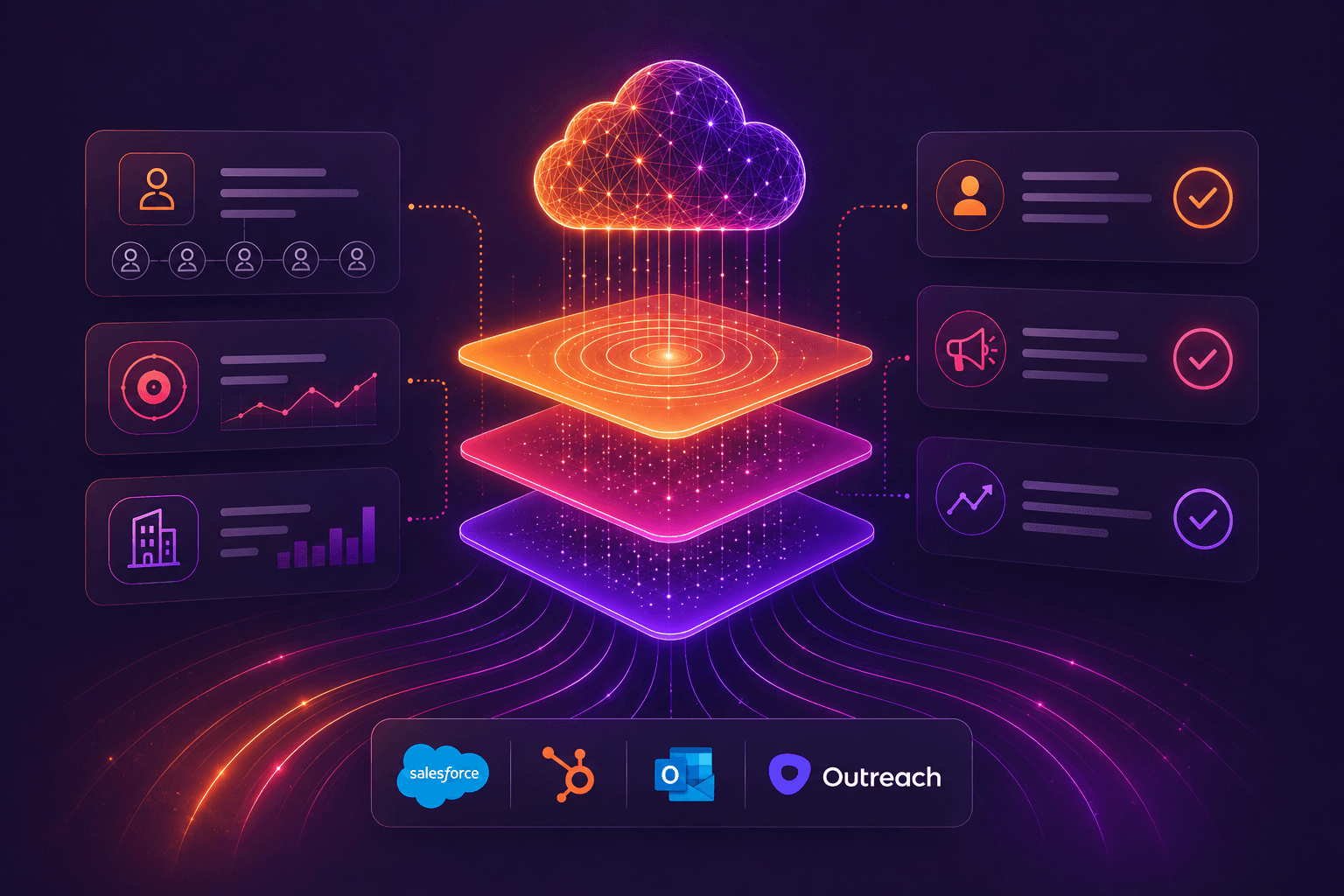
New platform unifies dynamic data, buyer intelligence, and AI-ready execution across marketing, sales, and revenue operations
PALO ALTO, CA | June 10, 2026 — Leadspace today announced the launch of its GTM Data Intelligence Cloud™, a unified system of record for go-to-market intelligence that helps revenue teams operate with speed and confidence in an AI-driven, buyer-led world. Built on more than a decade of investment in enterprise-grade data intelligence, the platform brings unified identity and buying-group context together with AI-ready execution, delivering real-time intelligence and action to mid-market and enterprise B2B organizations alike.
As go-to-market teams accelerate AI adoption across marketing, sales, and revenue operations, many remain constrained by fragmented, outdated data spread across disconnected systems. Without unified, continuously updated intelligence, organizations struggle to understand true buying groups, interpret real-time buyer signals, and act with confidence as decisions are being made.
Where traditional data providers stop at delivering information, the GTM Data Intelligence Cloud™ is built to act on it — among the first platforms in the B2B data industry designed to do the work of go-to-market on behalf of revenue teams, not just supply the data behind it. The platform is built in three connected layers: a continuously updated data foundation, and two new products that surface its intelligence where revenue teams work — one in the flow of an individual rep's day, and a shared workspace for marketing, sales, and revenue operations to act on real-time buyer signals.
Dynamic Data Intelligence: the shared data engine beneath the entire platform, refined through more than a decade of sustained investment and available today — resolves identity across accounts, contacts, and the corporate hierarchies that define buying groups; continuously ingests first- and third-party signals, including intent, website, and social activity, job changes, and funding events; and layers on firmographic and technographic enrichment. Accessible through APIs and the Leadspace MCP Server, it feeds every product above it.
Leadspace Sidekick — the company's first new product under the platform, launched this week — brings AI-powered selling intelligence to individual reps in the flow of work. Available today as a Chrome extension, with a companion web app to follow, Sidekick combines conversational AI with real-time contact, company, and firmographic intelligence — generating account research, personalized outreach, buying group identification, and lookalike modeling that surfaces similar contacts and companies on demand. Reps can build target lists in natural language and push contacts to Salesforce, HubSpot, or Outreach, or export them to file.
Leadspace Command Center: the AI-native workspace shared across marketing, sales, and revenue operations — turns the platform's continuous, first-party buyer signals into prioritized, one-click actions. An embedded conversational AI layer lets users ask natural-language questions and take action without leaving the workspace. It draws on inbound buyer activity from across digital channels — web visits, email engagement, content interactions, LinkedIn intelligence, and more — resolved to the account and contact level, triggering signal-driven execution programs that orchestrate next steps across CRM, campaigns, and sales engagement.
Rather than simply surfacing insights, this layered approach enables marketing, sales, and revenue operations teams to identify real demand earlier, understand who is involved in each buying decision, and move from signal to action in real time as buyer behavior changes.
"Data is at the heart of modern go-to-market success, but most teams are still operating on data that was never built for today's buying reality," said Eric Presbrey, Chief Executive Officer of Leadspace. "The GTM Data Intelligence Cloud reflects a new mental model for go-to-market. It is built to serve as the system of record for GTM intelligence, unifying identity, intent, and buying-group context so teams can identify buying intent, understand who is involved, and take action while buyers are actively making decisions."
"In an AI-driven GTM model, data is not a supporting layer. It is the system of record that powers coordination and execution," said Geoff Smith, Chief Marketing and Product Officer at Leadspace. "By connecting unified intelligence with AI-ready workflows, we enable go-to-market teams to move from insight to next-best action with speed and confidence."
As AI becomes embedded across GTM workflows, organizations that unify identity, intent, buying-group context, and execution within a single system of record will be best positioned to compete and grow. The GTM Data Intelligence Cloud™ is designed to be that system — from the first signal to the last action.
For more information, visit www.leadspace.com.
About Leadspace
Leadspace is a B2B data intelligence company redefining how go-to-market teams operate in an AI-driven world. The Leadspace GTM Data Intelligence Cloud™ is a GTM intelligence platform that brings enterprise-grade data depth to mid-market and enterprise B2B organizations, unifying identity, intent, and buying-group context into a single system of record and connecting that intelligence to the systems and workflows where GTM teams operate. Leadspace helps marketing, sales, and revenue operations teams move from fragmented data to confident, outcome-driven execution.
Latest Articles

Article
How to audit and fix duplicate CRM records in 2026
Your CRM is supposed to be the system of record for your entire go-to-market operation. In practice, it often becomes a graveyard of duplicate contacts, mismatched accounts, and stale fields that no one trusts. When that happens, every downstream system that depends on CRM data starts making bad decisions.
Scoring models weight the wrong signals. Routing sends leads to the wrong reps. Segmentation breaks. Campaigns reach the same buyer five times across three different records. The problem is not that your team is careless. The problem is that CRM data quality issues compound fast, especially when you are pulling data from multiple sources and running enrichment at scale.
This guide walks through how to find the root causes of duplicate records, build governance rules that hold, and maintain data validation and cleansing as an ongoing operation rather than a quarterly fire drill.

Article
Measuring TAM coverage, not just TAM size
You already know your TAM number. That number looks useful in planning decks and board slides. It tells you how many accounts fit your ICP and how much revenue sits in the market.
It does not tell you whether your team has enough territory coverage to work that market well.
That gap matters. In outbound TAM development, territory performance depends on coverage over volume. If you assign a large market without measuring who you can reach, who you can route, and who you can engage across the buying group, you create blind spots inside your territory model.
This is whereEnterprise Data Management becomes operational. It gives you a way to measure TAM coverage at the account, contact, and buying group level. You stop asking how big the market is. You start asking how much of it your team is equipped to work right now.

Article
Turning account engagement into buying momentum with Custom Audiences
Account engagement rarely fails from lack of activity. It fails when you see activity at the account level but miss who is driving it, how interest is spreading, and when to act. That gap slows follow-up, weakens targeting, and leaves pipeline exposed.
If you want stronger account engagement, you need more than account coverage. You need Custom Audiences built from buying-team signals. That gives you a way to move from broad account reach to coordinated influence across the people who shape a deal.
That shift matters because B2B buying is already group-driven. According to 6sense research, 92% of B2B purchases involve groups of three or more people. A lead-centric model misses that reality. Your targeting should reflect the full buying team.